Home / Havanese vs Yorkie
Havanese vs Yorkie
Havanese usually wins on family temperament and easy training. Yorkie usually wins on sheer small size and the lowest-shedding coat. Here is the honest, numbers-first breakdown.
Home / Havanese vs Yorkie
Havanese usually wins on family temperament and easy training. Yorkie usually wins on sheer small size and the lowest-shedding coat. Here is the honest, numbers-first breakdown.
Short answer: pick the Havanese if you want the steadier family dog. Pick the Yorkie if you want the smaller dog with the lower-shedding coat. Longer answer: both breeds get lumped together because they are small and long-coated, but the real differences show up in temperament, trainability, and exactly how the coat behaves, not in some vague "better breed" verdict. Here is the honest side by side.
Our take
Havanese usually wins for families with young kids and first-time toy-breed owners. It is the sturdier, more even-tempered of the two, it house-trains faster, and it rarely reacts defensively to strangers or other dogs. Yorkie usually wins if your top priority is the smallest possible dog or the least possible shedding: the AKC standard caps a Yorkie at 7 pounds, and its single-layer coat typically sheds even less than the Havanese's soft double coat. Both are low-effort exercisers and both live 13 to 16 years on average. If you are choosing on temperament and family fit, lean Havanese. If you are choosing on size and coat, lean Yorkie.
Thirteen points that actually matter when you are choosing between the two, not just breed-standard trivia.
Swipe sideways on a phone to see the Yorkie column.
| What matters | Havanese | Yorkie |
|---|---|---|
| Weight | 7 to 13 lbs | Up to 7 lbs by breed standard |
| Height at shoulder | 8.5 to 11.5 in | 6 to 9 in |
| Coat structure | Soft double coat, silky outer coat and undercoat | Single-layer coat, close to human hair, little to no undercoat |
| Shedding | Low. A common pick for allergy-conscious households, never allergy-free | Also low, and often even less than the Havanese because of the single-layer coat |
| Temperament | Cheerful and gentle, rarely defensive with strangers | Bold, terrier-confident, can be reactive to strangers and other dogs |
| With young kids | Sturdier build, widely considered patient with children under supervision | Breed resources recommend waiting until kids are 5 and older |
| Trainability | Eager to please, house-trains quickly with positive methods | Intelligent but independent, notoriously slow to house-train |
| Exercise needs | Short daily walks plus indoor play | Short daily walks plus indoor play, about the same |
| Grooming | 2 to 3 brushings a week, trim every 6 to 8 weeks if kept short | Similar brushing schedule, many owners keep a shorter puppy trim |
| Health testing to ask for | Hip, patella, eye exam (CERF or CAER), cardiac, BAER hearing | Patella, eye exam (ACVO), liver shunt bile-acid screening |
| Average lifespan | 13 to 16 years | 13 to 16 years, essentially a tie |
| AKC recognition | 1996 | 1885, well over a century earlier |
| Typical price | $1,500 to $3,000 | Roughly $1,200 to $3,500 nationally |
If you have only ever seen a Yorkie in a bow and a sweater, the breed's actual background explains a lot about its personality.
Yorkies were bred to hunt rats in English mill towns before they became Victorian-era lap dogs, and the AKC recognized the breed all the way back in 1885. That working-terrier instinct is still visible today: boldness, a strong prey drive toward small animals, and a dog that does not act like it is small.
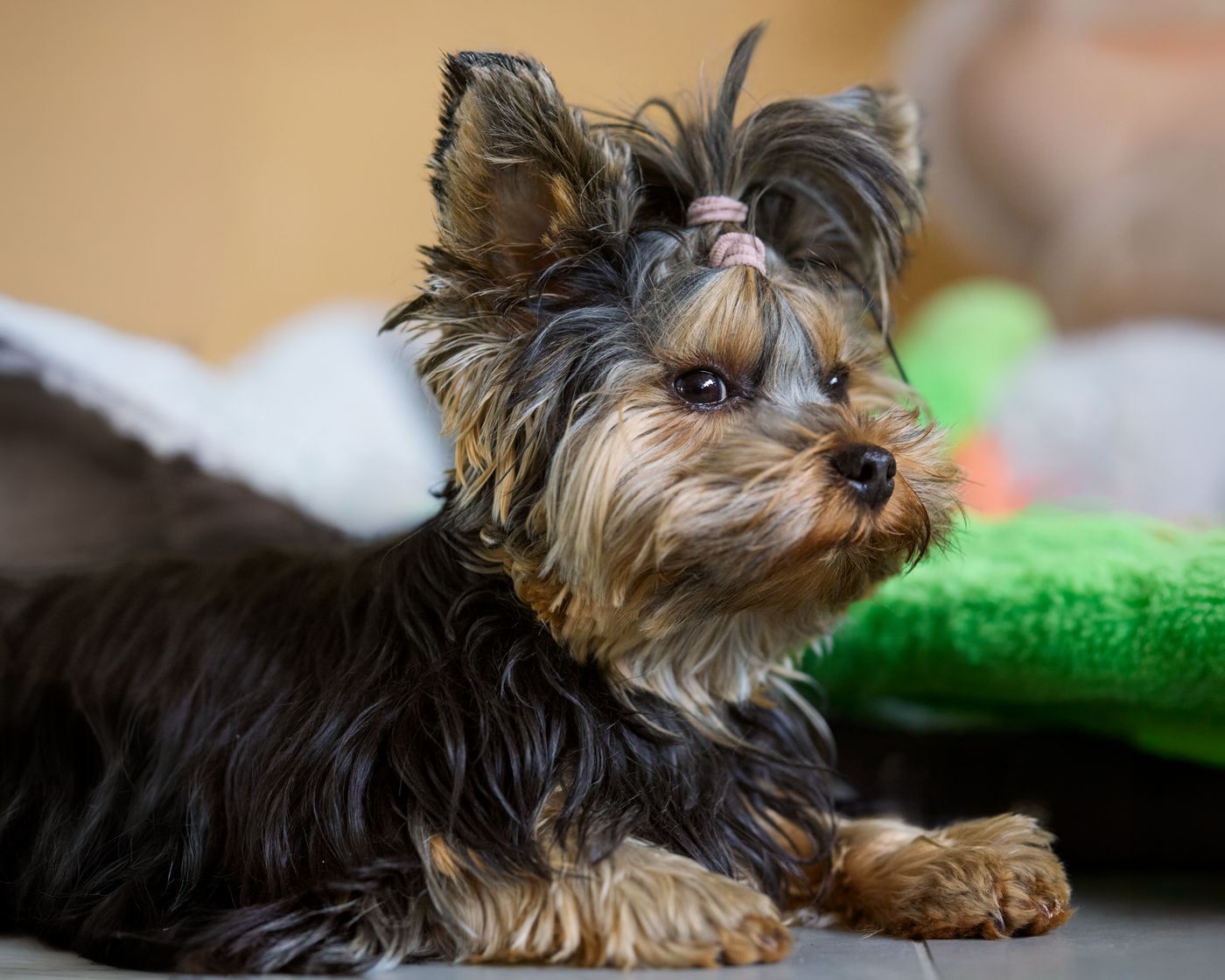
A Yorkie's coat is a single layer of fine hair with almost no undercoat, which is why groomers and vets consistently call it one of the lower-shedding toy breeds. It is also higher upkeep to keep long: daily brushing prevents matting, which is why so many pet Yorkies wear a shorter, easier trim instead.
The honest part
It would be easy for a Havanese site to only tell you what is good about a Havanese. Here is where the Yorkie is genuinely the better dog on paper, not a consolation prize.
Both are low-shedding, and plenty of allergy-sensitive owners do fine with either breed. The Yorkie's coat is a true single layer with almost no undercoat, so it typically sheds even less than the Havanese's soft double coat. Neither breed is allergy-free. If allergies are a real concern, spend time with an adult dog of the specific breed before you commit.
The Havanese, generally. Havanese are eager to please and respond well to positive training, including house training. Yorkies are just as intelligent but more independent-minded, and the breed has a reputation as one of the harder toy breeds to house-train.
The Havanese tends to be the steadier choice. It is a sturdier toy breed and widely considered patient with children, though play should always be supervised. Yorkies are smaller and more easily hurt during rough play, and breed resources generally recommend waiting until kids are 5 or older.
Both shed very little compared to most breeds. The Havanese has a soft double coat that still carries some undercoat. The Yorkie's single-layer coat usually sheds even less, part of why it comes up so often in allergy-related searches.
The Yorkie. The AKC breed standard caps a Yorkshire Terrier at 7 pounds, while a Havanese typically runs 7 to 13 pounds. If the goal is the smallest possible dog, the Yorkie wins outright.
Neither, really. Both breeds average 13 to 16 years with good care, one of the closer ties in this whole comparison.
Leaning Havanese? See what to look for before you buy and what day-to-day life with the coat and personality actually looks like. Leaning Yorkie? See Yorkie puppies at Yorkie Pup Finder, a family-owned site in the same network.
Read the breeder checklist